
HubSpot workflow


QBR Deck (Formal)
Open every quarterly review with the account details already filled in. Portant merges the company, the contact and the renewal date from HubSpot into a Formal Google Slides deck, and the results, win, risks and roadmap slides are laid out for you to complete.
~5 min setup · Used by 100+ teams
Trusted by 40,000+ teams










Overview
Generate a Formal QBR deck from HubSpot
The review is on Thursday and the deck is last quarter's deck with a new date. An old contact name survives under the quote, the renewal slide still quotes the previous date, and the customer reads exactly those lines most closely.
This template builds the account-specific frame for you. Data merge writes the account details into the Formal deck: the company name, the contact's first name and job title, and the company renewal date. You add the numbers, the win, the risks and the roadmap. Output management files the finished Google Slides deck where you tell it to.
It suits account managers and customer success leads who run reviews for existing customers every quarter. Bold and Elegant siblings cover the same eight slides in other visual styles, and the whole family ladders up to sales and revenue operations.
Who is this for
Is this template right for you?
Teams who generate documents from structured data.
-
The account frame is right before you open it. The company, the contact and the renewal date come from HubSpot, so preparation time goes on the quarter's results instead of on checking names.
-
Every review follows the same structure. Customers get results first, then learnings, the roadmap and clear asks on both sides, whichever account manager runs the call.
-
A neutral look for conservative accounts. Light type on a pale background with a blue palette suits customers who expect a review to read like a board pack, and the roadmap is written as a plain month-by-month list.
Setup
How to set up the Formal QBR deck
-
01
Step 1: Connect HubSpot and Google Slides
Open Portant, install the HubSpot app from the Marketplace, and connect the Google Drive account that will hold the deck template and the generated decks.
-
02
Step 2: Set the brand, presenter lines and sample figures
The cover carries a sample logo and a blue abstract image. Replace both once, set the presenter line ("[Your Name], [Title]") and the contact details on the last slide, and type the review period over [Quarter, Year]. Then overwrite the sample results (112%, 38h and 99.4%) and the bracketed figures around them, because the template does not calculate them from HubSpot. Page through the other slides before you save, in case a brand element needs swapping there too.
-
03
Step 3: Check the field mapping
Four tags are already mapped: the company name from the company record, the contact's first name and job title from the contact, and the company renewal date. Unlike the other styles, the Formal attribution has no last name. Confirm the contact HubSpot associates is the person you are quoting, and confirm the company record holds your renewal date.
-
04
Step 4: Set the trigger and the output location
Choose the workflow action or app card button that starts the run, and tell output management where to save the deck. Then open it, complete the quarter's content and present.
Frequently asked questions
A quarterly business review deck is the slide deck an account manager or customer success lead presents to a customer each quarter. It covers results against the goals set last quarter, a win, challenges and risks, the roadmap and the actions each side owns. This template generates the account-specific frame from HubSpot and leaves the results to you.
The company name comes from the HubSpot company record, the contact's first name and job title from the associated contact, and the renewal date from the company renewal date property. The attribution under the quote shows a first name only, with no last name. The cover carries a [Quarter, Year] placeholder rather than a stamped date. Results, roadmap items, risks and asks are fixed text or bracketed placeholders you complete.
In the Formal deck the renewal sentence reads the company renewal date, so keep that date current on the company record. The Bold version reads the close date of the deal instead, and Elegant reads the same company renewal date as this one.
No. The percentages, hours and document counts on the results slide are sample figures, and the template does not calculate them from HubSpot. Overwrite them with the account's own numbers, along with the bracketed values for last quarter's baseline and the win.
The same eight slides ship in three styles: QBR Deck (Bold), QBR Deck (Elegant) and QBR Deck (Formal). This one is Formal: blue, light type and a cover image, with the roadmap written as a Month 1, 2 and 3 list. Bold is heavy capitals with cream and orange and runs from a deal, and Elegant is black on white with serif headings. Formal and Elegant both run from a company record.
The Formal deck ships with a sample logo and a blue abstract image on the cover. Replace both in the Google Slides template once, and set the presenter and contact lines, so every generated deck carries your brand.
Related templates
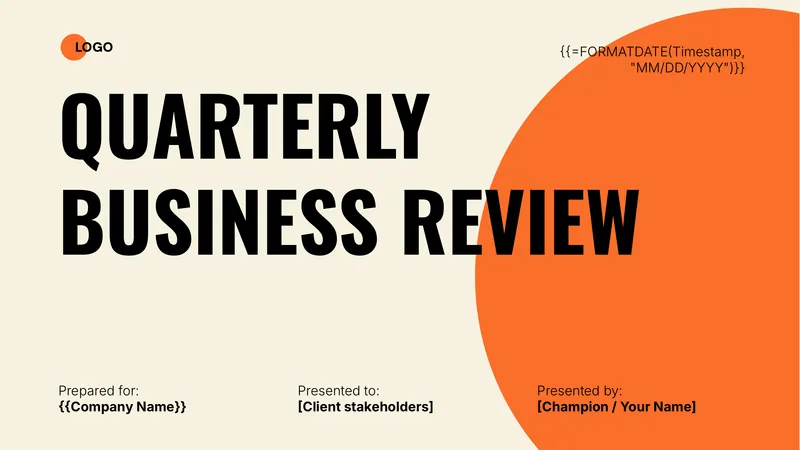
QBR Deck (Bold)
Open every quarterly review with the account details already filled in. Portant merges the company, the contact and the renewal date from HubSpot into a Bold Google Slides deck, and the results, win, risks and roadmap slides are laid out for you to complete.
View template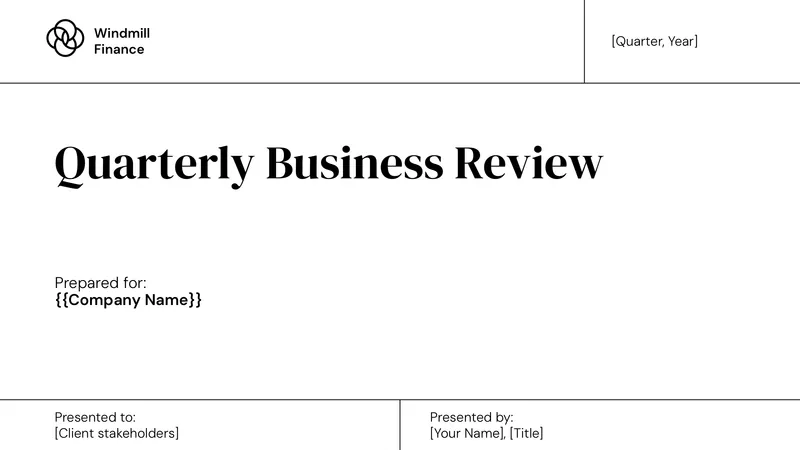
QBR Deck (Elegant)
Open every quarterly review with the account details already filled in. Portant merges the company, the contact and the renewal date from HubSpot into an Elegant Google Slides deck, and the results, win, risks and roadmap slides are laid out for you to complete.
View template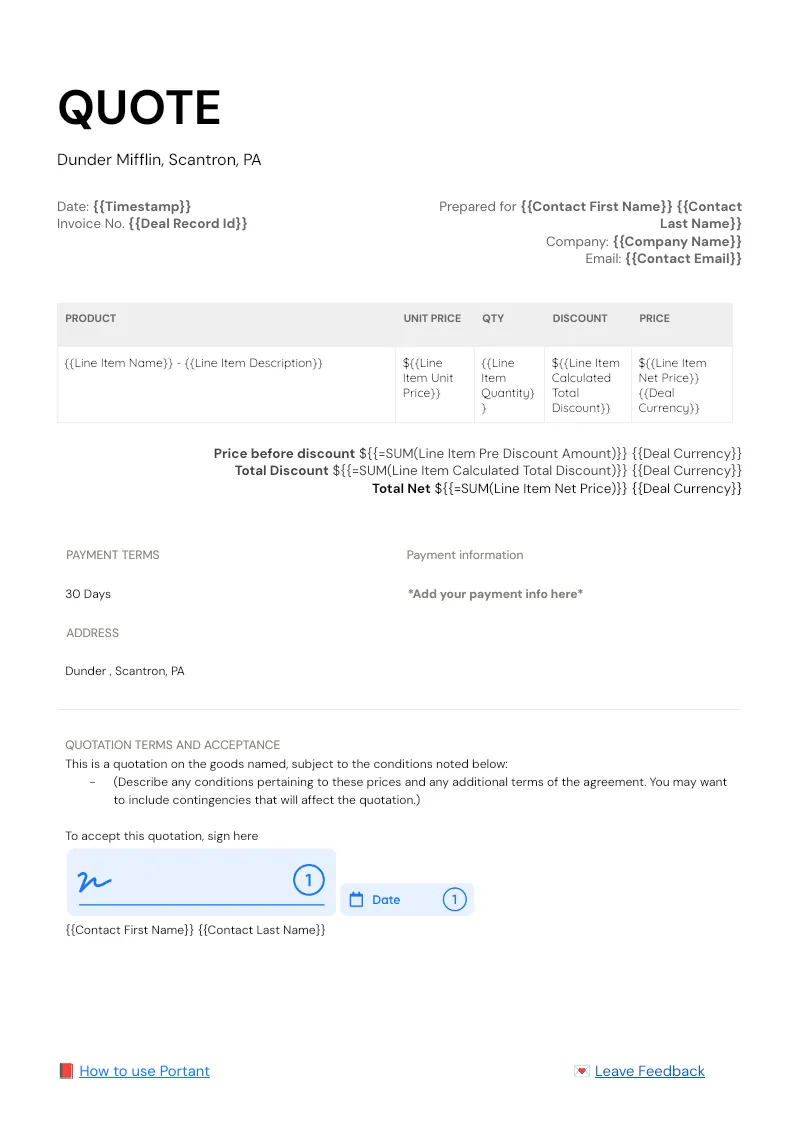

HubSpot Quote Workflow
Pull every HubSpot deal line item into a branded quote in Google Docs, then route it for approval and signature without leaving the CRM. Portant Line items, Data merge, and eSignatures handle the table, the fields, and the signing.
View templateJoin over 40k+ teams using Portant
Portant has been a game-changer for Clipboard! It's saved our sales team countless hours every week by generating order forms, proposals and contracts with info from HubSpot automatically filled in.
With Portant, I run documents directly from HubSpot. No jumping between platforms. No copying data.
Portant replaced three separate tools for us. One platform handles docs, signatures, and follow-ups without leaving HubSpot.
Hundreds of contracts go out in a few clicks. The signed ones come back in, and the rest are easy to spot.
At RepCard, Portant gave us an end-to-end automated workflow inside HubSpot, we replaced manual agreement creation at scale.
We're seeing higher average closed revenue with Portant and faster days to close, it's showing us a material impact on sales velocity.
Love this product. Have been using it for over a year and the integration to Google Workspace is awesome. Lots of credit for listening to your users!
When the executive team asks for an extension document, Portant gets it to them in about an hour, it's empowered my whole team.
Truly a gamechanger! Portant streamlines these tasks and allows me to focus on the things that require my attention and problem-solving!
This software brilliantly takes over the tedious process of creating and sending invoices. This not only saves time but massively reduces errors of data entry.
This product is a gamechanger for all of those painful manual document merges. Love what you and the team have built!
Our reps used to spend 30 minutes per proposal. Now it’s under two minutes and the documents look better than ever.