
Contract template
Price Contract Template
Copy our Price Contract Template, and automate your contract process.

Trusted by teams at










Price Contract Template
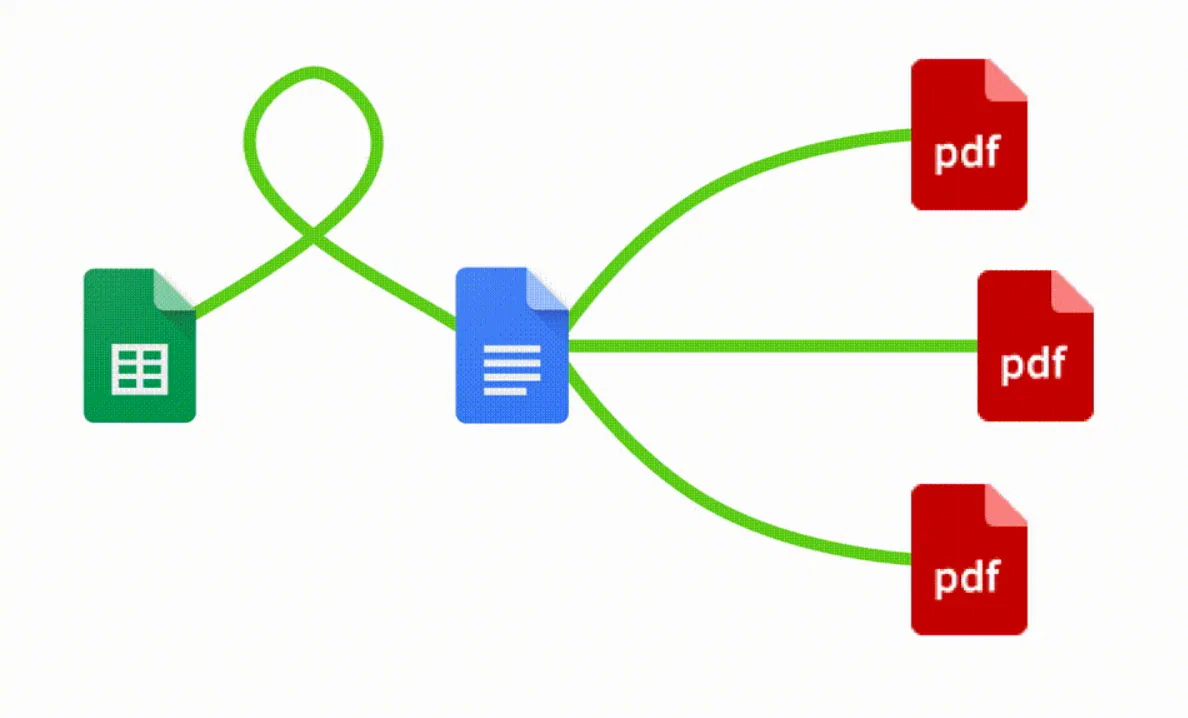
You can create price contract templates automatically from Google Sheets in a few easy steps. It is simple to use Portant as a free price contract template which contains all kinds of different elements including your logo, unique contract numbers, payment terms and contact information. After you've opened Portant Workflow, select your Google Sheet, then connect a Google Docs contract template, customise your price contract template with column tags, attach it to an email and finally click 'Start automation', and voila!, you’ve automated your price contract process from Google Sheets!
We know how painful and monotonous it can be to copy and paste data into price contract templates, double check all the information is correct, save it as a pdf and then send the price contract to your customers. That’s why we’ve come to the rescue.
With Portant, you can connect a Google Sheet to a price contract template, click a few buttons and contracts will be magically generated and sent whenever you need to. You can also customise the email and who it's sent from (e.g accounts@portant.co). It's easy to place your price contract on autopilot.
How to automate your price contracts

Step 1
Open Sheet
Select the Google Sheet you want to use as the data source for your contracts. Portant connects directly to your spreadsheet to pull in the data it needs.

Step 2
Connect Template
Connect your Google Docs, Slides, or Sheets contract template. Portant will link it to your spreadsheet data source so it knows which fields to merge.

Step 3
Customize
Customize your contract with merge tags like {{Party Name}}, {{Terms}}, and {{Effective Date}}. Format it with your branding, colours, and layout.

Step 4
Create
Create contracts automatically when new rows are added to your sheet, or generate them manually in batches. Send via email or save to Google Drive.
How to automate your price contracts with a template
Step 1
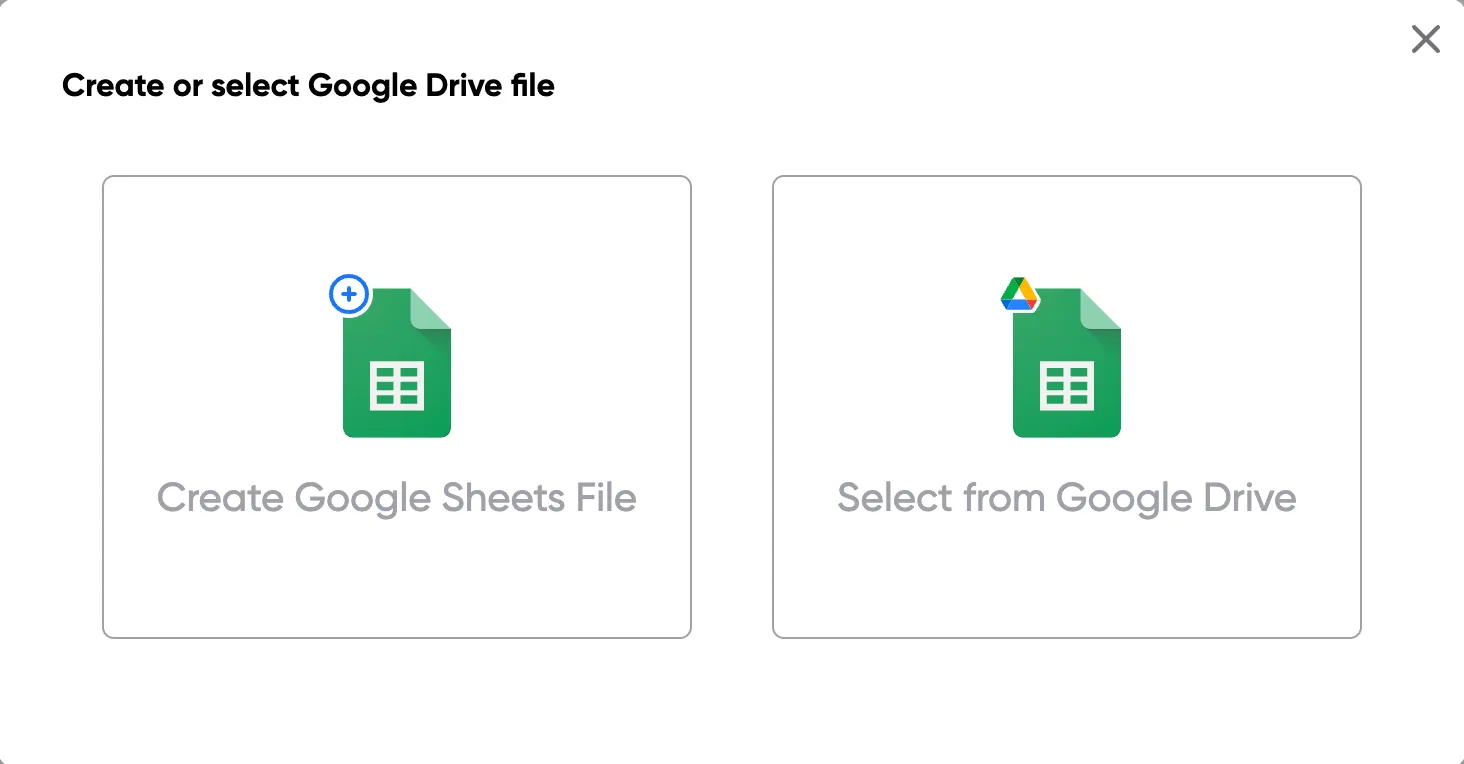
Step 1: Open a Google Sheet
Open a Google Sheet with your contract data. Include party names, terms, effective dates, and any other fields you need to merge into your contracts.
Step 2
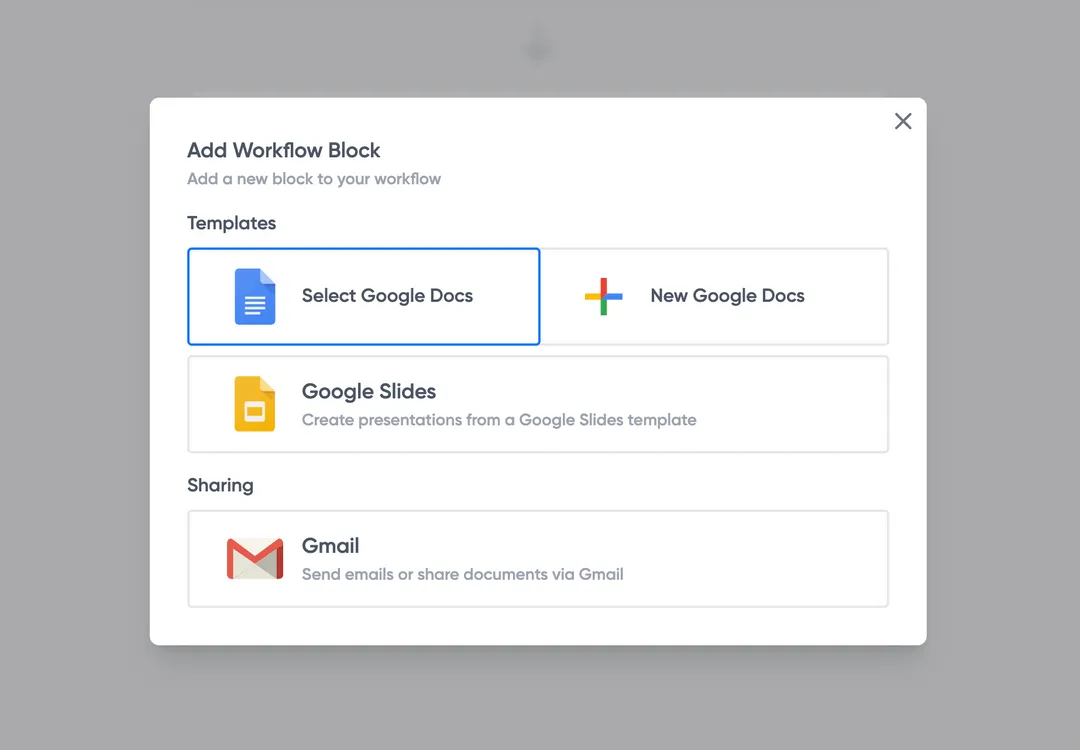
Step 2: Connect your contract template
Open the Portant add-on and connect your Google Docs contract template. Portant scans for merge tags and maps them to your spreadsheet columns.
Step 3
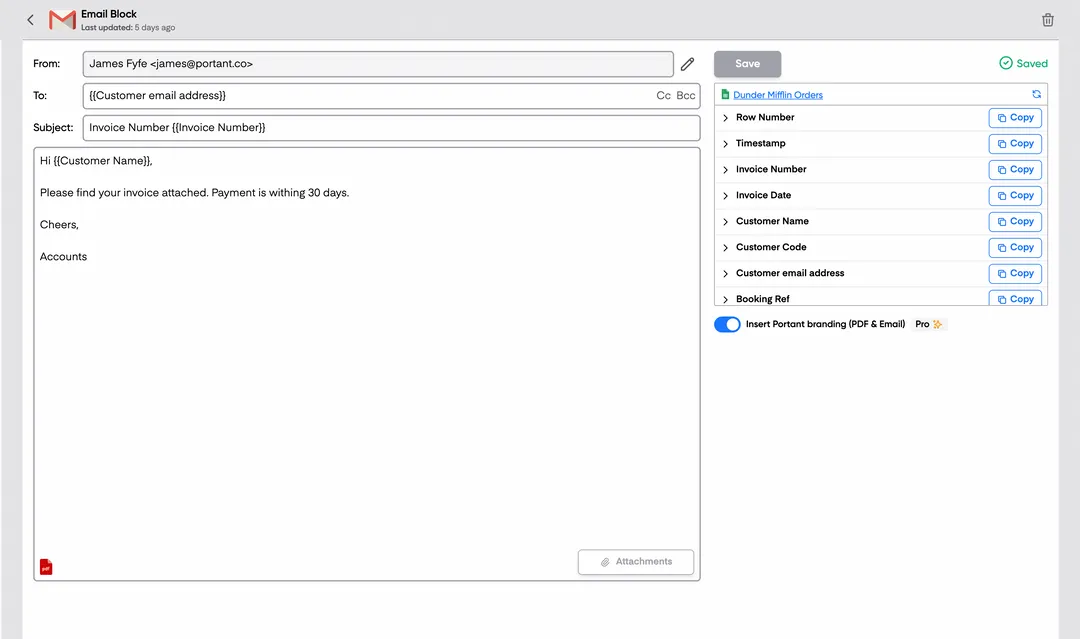
Step 3: Customize your output
Set up your delivery method. Email contracts to signers, save as PDFs in Google Drive, or request eSignatures directly through Portant. Use merge tags in emails too.
Step 4
Step 4: Automate your contracts
Turn on auto-create to generate contracts for every new row. Process rows in batches or schedule the workflow to run at set times.
Eliminate unnecessary manual work
Stop spending hours copying and pasting data from spreadsheets into documents. Portant automates the entire process, pulling data directly from your source and generating completed documents in seconds. Focus on the work that matters, not repetitive formatting tasks.
Make your documents more accurate
Manual document creation leads to errors, from wrong names to outdated figures. Portant maps data fields directly to your template, eliminating typos and ensuring every document is accurate and consistent. Your team sends fewer corrections and your clients get the right information every time.
Built into Google Workspace
Portant works natively with Google Docs, Sheets, Slides, and Gmail. There is no new interface to learn, no data to export, and no switching between tools. Your team stays in the apps they already use while Portant handles the document generation in the background.
What teams say about Portant
“Portant has been a game-changer for Clipboard! It's saved our sales team countless hours every week by generating order forms, proposals and contracts with info from HubSpot automatically filled in.”
“This product is a gamechanger for all of those painful manual document merges. Love what you and the team have built!”
“This software brilliantly takes over the tedious process of creating and sending invoices. This not only saves time but massively reduces errors of data entry.”
“Love this product. Have been using it for over a year and the integration to Google Workspace is awesome. Lots of credit for listening to your users!”
“Truly a gamechanger! Portant streamlines these tasks and allows me to focus on the things that require my attention and problem-solving!”
“Portant has been a game-changer for Clipboard! It's saved our sales team countless hours every week by generating order forms, proposals and contracts with info from HubSpot automatically filled in.”
“This product is a gamechanger for all of those painful manual document merges. Love what you and the team have built!”
“This software brilliantly takes over the tedious process of creating and sending invoices. This not only saves time but massively reduces errors of data entry.”
“Love this product. Have been using it for over a year and the integration to Google Workspace is awesome. Lots of credit for listening to your users!”
“Truly a gamechanger! Portant streamlines these tasks and allows me to focus on the things that require my attention and problem-solving!”
Frequently asked questions
Fixed-price contracts are ideal when the scope of work is clearly defined and unlikely to change. These agreements are common in projects like construction where both parties involved understand the specifics, including the governing law, payment details, and services being provided. A fixed fee ensures that cost fluctuations are avoided, and the responsibilities between the contractor and client are clearly defined. For instance, in a construction project, this type of agreement is useful when there is a need to outline responsibilities, avoid disputes, and ensure smooth project completion.
A comprehensive price contract typically includes sections that outline project details, payment terms, timelines, compensation, and intellectual property rights. For example, partnership agreements, especially in the construction industry, must also include detailed descriptions of job responsibilities, project timelines, and ownership rights. Confidential information and electronic signatures can be included to protect both parties. The use of a well-drafted contract template is essential for ensuring clarity. Be sure to also customize templates as needed to match the specific needs of the parties involved, such as an independent contractor or a service provider.
The primary difference between these agreements lies in how costs are structured. In a fixed-price contract, the fee is set at the beginning, and the price doesn’t change, regardless of labor or materials used. A cost-plus contract, however, includes a base fee with reimbursements for actual expenses incurred. In a construction project, the use of fixed-price contracts simplifies project management, while cost-plus contracts may include additional items like materials or labor fees. Ensure that the terms are clear, including payment details, to avoid issues later.
The scope of work in a price contract must clearly define the services being provided, including specific tasks, permits, and equipment. The job description should detail any permits required and specify whether the service provider or contractor is responsible for obtaining them. For example, in a construction project, the document must cover everything from labor to materials. Defining the scope is crucial to prevent misunderstandings, especially when using a fixed-price contract. It also helps the client ensure that the contractor adheres to all applicable laws and regulations.
Typically, a fixed-price contract is set once agreed upon. However, changes in the project scope or a new agreement due to changing material costs may lead to renegotiation. Contractors might include change orders in their contract to adjust fees for additional work, which would need to be agreed upon by both parties. To avoid disputes, outline the conditions under which the contract can be modified. The terms of change orders should be clearly stated in the contract to prevent disagreements.
Payment terms in a fixed-price contract are often structured in stages, with an initial deposit and payments due upon completion of certain milestones. This is especially common in construction contracts, where the client and contractor agree on a flat fee, with the final payment due upon completion of the job. The payment schedule typically ensures that all parties fulfill their obligations. Templates can help to streamline this process, as they allow for the easy customization of payment details based on the specific terms agreed upon.
When the scope of a project changes, a new agreement may be necessary to reflect the additional work. This could involve renegotiating compensation, payment schedule, or materials required. Using a change order template simplifies the process by ensuring that both parties, whether a client or a service provider, understand the new terms and sign the updated contract. In a construction project, this could mean adding new tasks or adjusting fees for added labor. It's crucial to customize the contract to document all changes in writing.
Confidentiality clauses protect both parties by ensuring that sensitive information, such as intellectual property, financial data, or client information, remains secure. In construction or other service-related agreements, maintaining confidentiality ensures that proprietary techniques or pricing details aren’t shared with third parties. These clauses can also include responsibilities regarding the ownership of work produced under the contract. Independent contractors, for instance, must comply with confidentiality terms to protect the client’s interests. Such terms can also be inserted into contract templates to standardize the process across multiple agreements.
Explore related templates
Vendor NDA Template
Automatically create vendor ndas with this NDA template.
View template Contract templateUnilateral NDA Template
Automatically create unilateral ndas with this NDA template.
View template Contract templateStartup NDA Template
Automatically create startup nda templates with this NDA template.
View template Contract templateEmployee NDA Template
Automatically create employee ndas with this NDA template.
View template Contract templateNDA Template (Non-Disclosure Agreement)
Create, customize, and e-sign a non-disclosure agreement in minutes. Free NDA template, automated with Google Docs, exportable to Word or PDF.
View template Contract templateMutual NDA (mNDA) Template
Create, customise, and e-sign a mutual non-disclosure agreement (mNDA) in minutes. Free template, automated with Google Docs.
View template