

I've watched the same movie twice. First, a team standardizes on PandaDoc because it's a serious product with a familiar editor. Second, HubSpot becomes the real center of gravity for pipeline, forecasting, and handoffs, and the document workflow starts to feel like a sidecar. Nobody's wrong on day one. The world just changed underneath the decision.
If you're reading this, you're probably past the debate about whether HubSpot is home. You want a migration narrative that's honest about work: templates, mapping, a pilot, and change management. I'll give you the version I use with customers, including where to read a structured comparison and how our HubSpot integration fits the story.
For the full picture of how document generation, data merge and eSignature fit together in HubSpot, see the complete guide to document automation in HubSpot.
Know what you actually need before you touch a template
PandaDoc is strong when the authoring surface is PandaDoc. Portant is built for teams that want to keep templates in Google Docs, Slides, Word, PowerPoint, or PDF workflows while HubSpot remains the system of record. That difference isn't cosmetic. It changes who owns the library, how legal reviews redlines, and how fast marketing can ship a layout tweak without opening a ticket in a second product.
Before you migrate anything, write one sentence: what must be true on the deal record after a document leaves the building? If the answer is only "a PDF exists," you'll under-invest in mapping and over-invest in heroics. If the answer is "we can report on version, approver, send time, and signature state without exporting logs," you're thinking like a HubSpot-first team. That's the profile Portant optimizes for, and it's why I point evaluators at Portant vs PandaDoc alongside the longer comparison article when they want feature-level context without a sales monologue.
Template inventory: what you keep, what you rebuild
Start with a boring spreadsheet. List every live template in PandaDoc, the owning team, the segments that use it, and the HubSpot fields you believe it consumes today. Mark which templates are high-volume, which are compliance-critical, and which are zombies that nobody's opened in two quarters. Migration energy should follow revenue and risk, not alphabetical order.
For each high-value template, export or copy the canonical content into a Google Doc or Word file your company already trusts. This isn't cheating. It's how you separate "the words and layout we approved" from "the merge engine we used last year." While you translate merge tags, you'll find duplicate clauses, conflicting footers, and three "standard" MSAs. Treat that as free governance work. The migration pays you back if you let it.
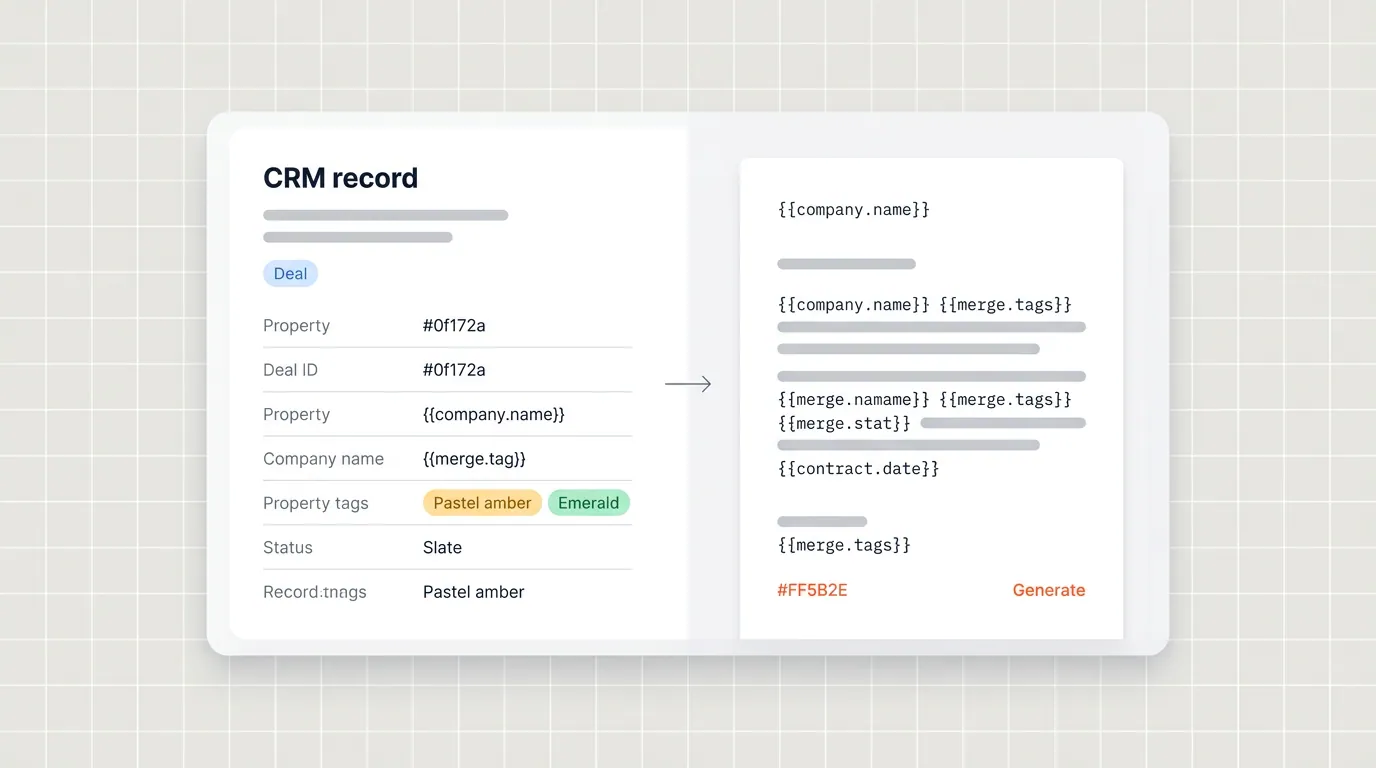
When people ask if they must rebuild from scratch, my answer is practical. You rebuild merge logic, not necessarily narrative. Paragraphs move. Tables become live line item blocks. Conditional sections map to HubSpot properties. The creative work is alignment, not typing.
Mapping fields without magical thinking
The failure mode I dislike most is aspirational mapping. Someone draws a beautiful diagram where every custom object feeds a proposal on day one. Then real deals arrive with blank subsidiaries, secondary billing contacts, and discounts entered as notes. The document looks empty in the wrong places and the project loses trust.
Instead, anchor on what already works in PandaDoc today. Export or document the field mapping you actually rely on. Translate those HubSpot internal names into Portant merge tags with the same discipline you'd use for a data migration. Test with the messiest open opportunity your ops lead can find, not the demo deal with perfect hygiene.
Line items deserve a special callout. If your commercial story depends on SKU-level tables, make sure quantities, discounts, and product names flow from HubSpot line items into the template rows. Finance should recognize the subtotal without opening a calculator. If they can't, fix CRM behavior first. A new document tool won't invent discipline your catalog never had.
Tip: Keep a single shared sheet with columns for human label, HubSpot internal name, object, and example values. Link to it from your enablement doc. Future you will thank present you when a property gets renamed.
Pilot design: one thread, measured in minutes
A pilot isn't "turn it on for everyone and hope." Pick one geography or segment, one template family, and one trigger that matches how reps already behave. Examples: generate a proposal pack when a deal enters proposal sent, or create an order form when discount approval completes. The trigger should feel obvious to the floor, not clever to RevOps.
Measure three numbers weekly: minutes from trigger to customer-ready file, count of manual touches per deal, and error rate on fields that historically broke. If you can't measure, you can't justify expansion. The pilot exists to produce a story finance understands.
Run PandaDoc and Portant side by side for that cohort for a short window if you need psychological safety. Give reps a clear rule for which path to use on which deal type. Ambiguity creates shadow processes. Shadow processes create wrong PDFs.
Change management: clarity beats features
Reps don't resist new software. They resist unclear ownership, flaky triggers, and being blamed when a merge tag prints blank. Fix the social contract at the same time you fix the stack. Name a single internal owner who can escalate to product and engineering. Publish office hours. Record a five-minute Loom for the happy path and a second Loom for the top two failure modes.
Celebrate wins where sales already lives. When a rep saves twenty minutes on a Friday, that story is worth more than a slide in a QBR. Leadership should repeat the same sentence every week: HubSpot remains authoritative, Portant projects it into documents we already trust. Consistency reduces whisper networks that invent alternate truths.
Legal and finance need explicit seats at the table early, not as a veto at the end. Show them auditability on the record, how approvals attach to context, and how versioning works when a customer asks for a wording tweak. If they trust the controls, they stop asking for parallel PDF attachments that defeat the whole point.
How I think about total cost and timeline
Timeline is a function of template count times complexity, not vendor magic. A focused commercial team with ten core templates moves faster than a conglomerate with two hundred variants nobody maintains. Be suspicious of any plan that promises enterprise-wide parity in a weekend. Be equally suspicious of a plan that needs six months before a single customer sees a generated file. The middle path is a tight pilot, then waves by segment.
Total cost includes admin time, enablement, template cleanup, and opportunity cost of waiting. Teams that try to save money by skipping the inventory step usually pay twice in rework. Invest the boring week up front.
What I want you to do next
If you're evaluating the move, read Portant vs PandaDoc for HubSpot teams, then open the comparison page with your RevOps lead and pick three must-have behaviors to test in a trial. Wire HubSpot with a real deal, not a toy. Bring one template through the full path. Measure minutes. Then decide on waves.
Migrations are emotional because documents touch money and reputation. Treat the work as a product launch inside your company. Templates, mapping, pilot, change management: do all four, and the switch stops feeling like a leap and starts feeling like an upgrade you can explain in one sentence.
Frequently asked questions
How long does switching from PandaDoc to Portant usually take?
Most teams I work with land a first live template in one to two weeks if the source layout already exists in Google Docs or Word. A full library migration depends on how many variants you carry, but you shouldn't need a quarter-long freeze to prove value on one high-volume path.
Do I have to rebuild every PandaDoc template from scratch in Portant?
No. Portant merges HubSpot data into documents you already author in Google or Microsoft formats. You translate merge logic and clause libraries into that world, which is different from retyping everything inside a new proprietary editor.
How should I map HubSpot fields when I move from PandaDoc?
Start from the deal, company, contact, and line item fields that already power your quotes today. Document internal names in a sheet, test one messy opportunity, and only then expand to custom objects or secondary contacts.
What is a good pilot scope when leaving PandaDoc for Portant?
Pick one segment, one document type, and one trigger, such as generating an order pack when a deal hits proposal sent. Measure minutes from trigger to customer-ready PDF and count manual touches. Expand only after that path is boringly reliable.
How do I keep sales calm during a document tool migration?
Name an internal owner, run side by side for a short window on the pilot cohort, publish a single support path, and celebrate early wins in Slack. Change management is mostly clarity, not slides.