
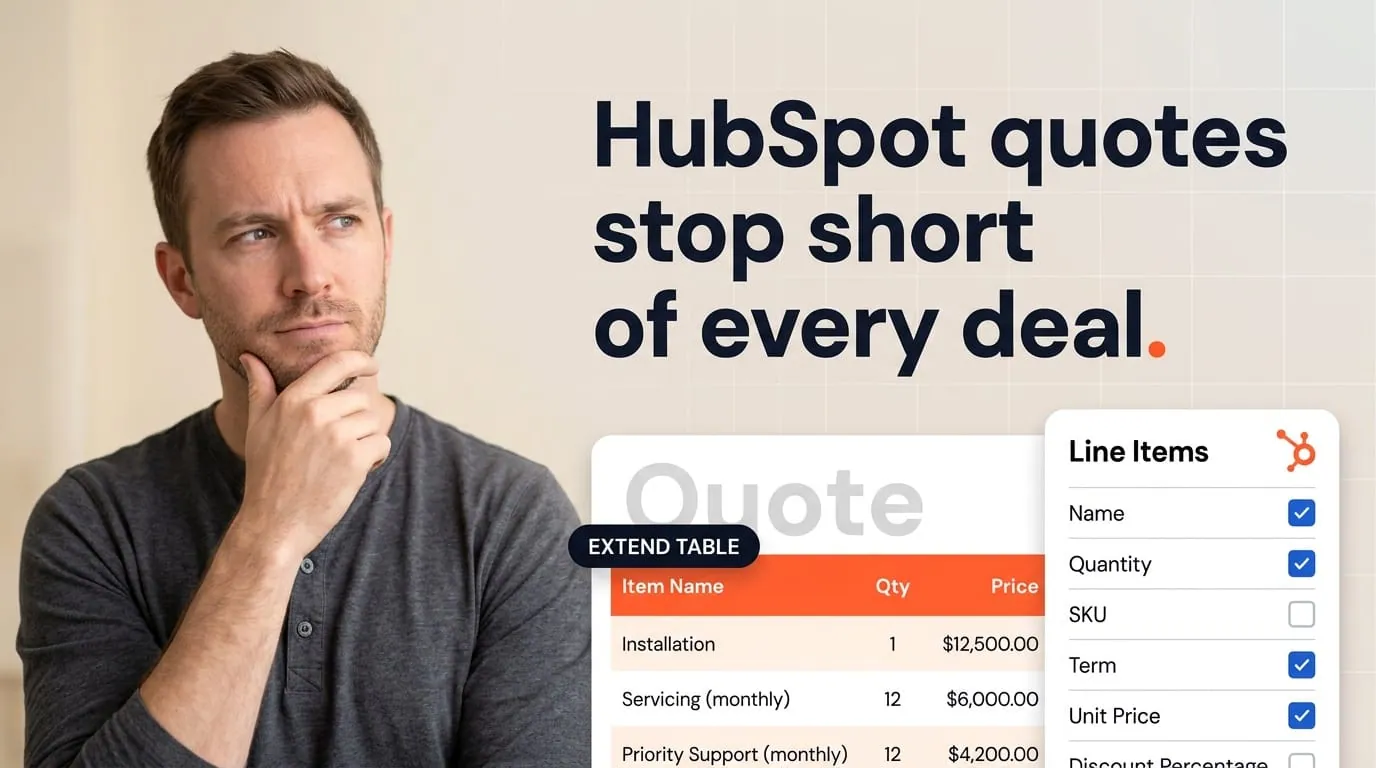
HubSpot Quotes can be a solid starting point for sales teams that need to send pricing to prospects. But as your team grows, your deals get more complex, and your brand standards rise, you will almost certainly hit limits. Many teams discover these HubSpot Quotes limitations after they have already committed to a process that cannot scale.
Here are the five most common limitations sales teams run into with HubSpot Quotes, and how Portant solves each one so you can keep your quoting process inside HubSpot without the workarounds.
For the full picture of how document generation, data merge and eSignature fit together in HubSpot, see the complete guide to document automation in HubSpot.
1. Rigid templates with limited customization
The problem: HubSpot Quotes uses a fixed template layout. You can adjust colors and add a logo, but you cannot fundamentally change the structure, add custom sections, or match the exact design of your brand materials. Teams that sell complex solutions with multiple product tiers, terms and conditions, or detailed scope descriptions find themselves fighting the template rather than working with it.
How Portant solves it: Portant lets you use your own templates in Google Docs, Slides, Word, or PowerPoint. Your brand, your layout, your design. Add placeholder tags for HubSpot data and Portant fills them automatically. You control every pixel of the output, and you never have to compromise on how your quotes look. Check out the Portant quotes solution to see examples.
2. No built-in eSignatures
The problem: HubSpot Quotes includes a basic countersignature flow, but it lacks the full eSignature functionality that many deals require. Teams that need legally binding electronic signatures, multi-party signing, or signature tracking end up exporting documents to DocuSign or PandaDoc. This adds extra steps, breaks the HubSpot workflow, and creates data silos.
How Portant solves it: Portant includes built-in eSignatures that work directly inside your documents. Send a quote for signature, track when it is viewed and signed, and sync the status back to HubSpot automatically. No external tools, no broken workflows, no extra cost for a separate signing platform.
3. No approval workflows
The problem: When quotes need manager or legal review before going to the prospect, HubSpot Quotes has no structured approval process. Teams resort to Slack messages, email chains, or shared spreadsheets to track who approved what. This slows down deal velocity and creates compliance risk, especially for teams with discount thresholds or contract value limits.
How Portant solves it: Portant supports multi-step approval workflows. Route quotes to the right approver based on deal value, discount level, or any custom property. Approvers review and approve directly inside the workflow, and every action is logged in HubSpot for a complete audit trail. Deals move forward without the Slack ping-pong.
4. Limited conditional logic
The problem: HubSpot Quotes generates the same layout regardless of the deal. If you sell multiple products, serve different industries, or need to adjust terms based on deal size, you end up maintaining separate quote templates for every variation. This creates template sprawl, increases the chance of errors, and makes updates painful.
How Portant solves it: Portant supports conditional logic in your templates. Show or hide sections, swap content blocks, and adjust terms based on deal properties, line item values, or contact fields. A single template can serve dozens of use cases. When you need to update your standard terms, you update one template and every future quote reflects the change.
5. No document lifecycle tracking
The problem: Once a HubSpot Quote is sent, visibility drops. You know it was sent, and you know if it was signed. But you do not know when it was opened, how many times it was viewed, which sections got attention, or whether the prospect forwarded it to someone else. For high-value deals, this blind spot can mean the difference between timely follow-up and a lost opportunity.
How Portant solves it: Every document Portant generates is saved back to HubSpot as its own record. You can track the full document lifecycle: when it was created, sent, opened, viewed, approved, and signed. Reps know exactly when to follow up, and managers have visibility into the entire pipeline without chasing anyone for updates.
Moving beyond HubSpot Quotes
HubSpot Quotes is a useful starting point, but it was designed for simple quoting scenarios. As your team grows and your deals get more complex, the limitations add up. Manual workarounds cost time, introduce errors, and slow down the deals that matter most.
Portant is built specifically for HubSpot teams that have outgrown native quoting. It keeps everything inside HubSpot, uses your own templates, and adds the automation, eSignatures, and visibility that modern sales teams need. Over 920,000 users trust Portant to automate their sales documents, saving an average of 125 hours per team per month.
Ready to move beyond the limitations? Start for free or browse Portant vs. alternatives for feature-by-feature comparisons.