

An eSign, or electronic signature, is any electronic method that shows a person’s intent to sign a document, from typing a name, to drawing a signature on a screen, to clicking “I agree.” Under laws like the US ESIGN Act, UETA, and the EU’s eIDAS Regulation, a properly consented electronic signature carries the same legal weight as a handwritten one.
Whether you’re onboarding new hires, closing sales proposals, or executing NDAs with partners across time zones, same-day SaaS subscriptions and cross-border agreements now close in minutes instead of days. This guide covers how eSign works technically and legally, the security and compliance features to look for, and how to choose a platform for your team.

If you just need to sign a PDF right now, you can use Portant’s free sign a PDF online tool, no account needed.
Need to sign a PDF?
Upload your PDF, add your signature and download the signed file. Free, no signup, no watermark.
What is eSign (Electronic Signature)?
eSign covers a wide range of methods beyond a simple typed name or click: drawing a signature on a touchscreen, uploading a scanned signature image, or using a certificate-based process with cryptographic verification all qualify, as long as the signer demonstrably intends to sign.
The term “eSign” functions both as a general concept and as branding for specific products. The term "e sign" is also commonly used to refer to digital signature solutions and tools that enable users to sign, edit, and share documents electronically across various devices and file types, emphasizing ease, security, and accessibility. When people refer to “eSign,” they might mean the broad category of electronic signatures or they might be referencing tools like Adobe Acrobat Sign, DocuSign, PandaDoc, Smallpdf, or Sign.com. Understanding this distinction helps when evaluating platforms, you’re choosing between implementations of the same underlying technology, not fundamentally different approaches.
Electronic signatures became mainstream after the late-1990s internet boom, with legislative frameworks catching up in the early 2000s. Today, they’re standard practice for remote work, with most organizations using them for at least half of their agreements. The shift accelerated dramatically during global events that forced businesses online, and the convenience factor means there’s no going back to paper-heavy workflows.
To understand where eSign fits in the signing landscape, consider the spectrum: traditional ink signatures require physical presence and paper handling, making them slow and costly for distributed teams. Basic electronic signatures like typed names or clicked checkboxes are fast and accessible but rely on context and audit trails for verification. Digital signatures use cryptographic certificates and public key infrastructure to provide the highest level of security, authentication, and tamper-evidence, ideal for high-stakes contracts and regulated industries. Most day-to-day business transactions fall somewhere between basic electronic signatures and fully certified digital signatures, depending on the risk level and legal requirements involved. eSign platforms are compatible with Mac devices, and you can sign documents from your browser on Mac, Windows, Linux, iOS, or Android without needing downloads.
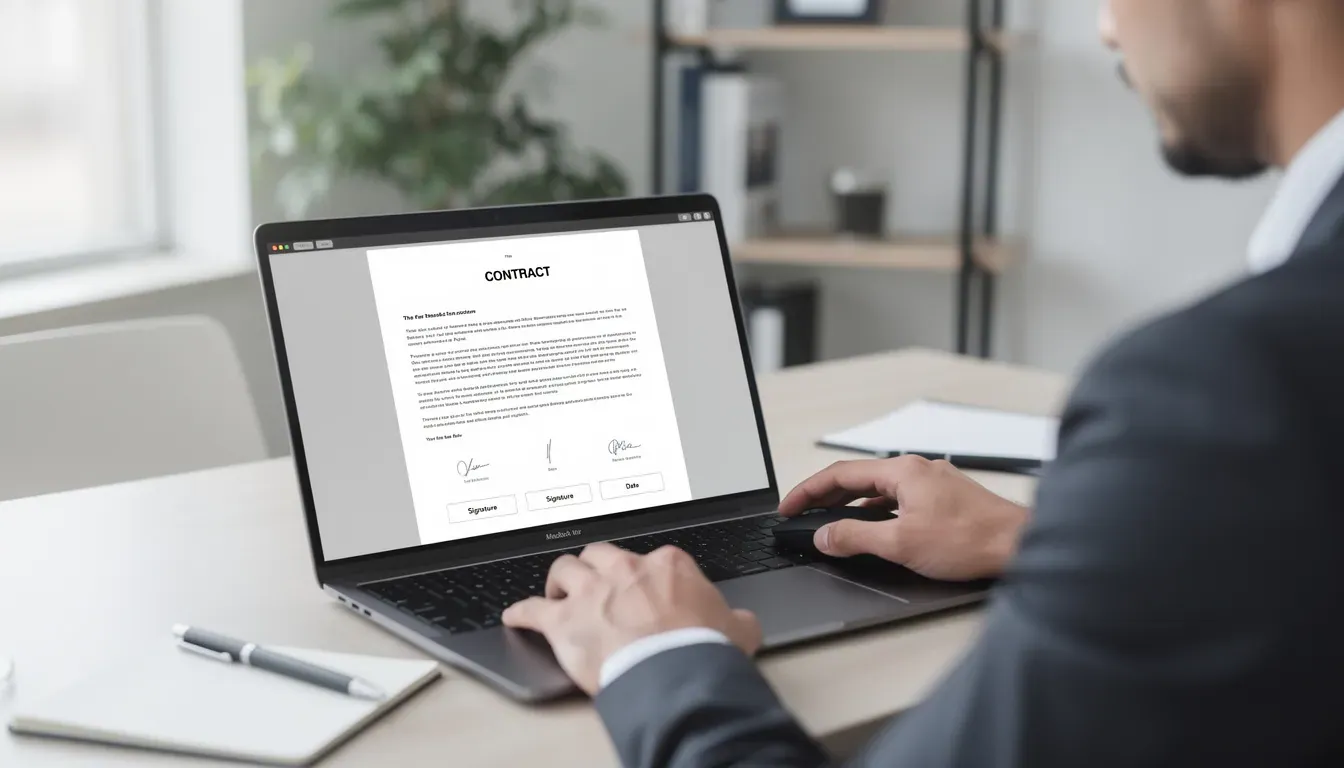
For example, a freelancer might sign a project contract by drawing their signature on a tablet and clicking “Accept.” A landlord and tenant might execute a rental agreement by each reviewing a PDF, adding their signatures via an eSign app, and receiving a signed document with timestamps. In both cases, the process replaces what once required in-person meetings, overnight shipping, or fax machines, and takes minutes instead of days.

Legal Foundations of eSignatures
Electronic signatures are legally valid in the United States, European Union, United Kingdom, India, and most developed markets, provided certain conditions are met. The legality of electronic and digital signatures is established by referencing relevant laws and regulations, which confirm their legal validity and enforceability in commerce. The fundamental principle across jurisdictions is that a signature cannot be denied legal effect solely because it’s in electronic form. However, the specific requirements for what makes an electronic signature enforceable vary by country and document type.
In the United States, the primary federal framework is the ESIGN Act, the Electronic Signatures in Global and National Commerce Act, signed into law on June 30, 2000. Laws like the U.S. ESIGN Act and E-Sign Law give e-signatures the same legal standing as wet ink signatures. The Electronic Signatures in Global and National Commerce Act ensures the validity of electronic signatures in the United States. This legislation established that contracts and signatures “may not be denied legal effect, validity, or enforceability solely because they are in electronic form.” The law is intentionally technology-neutral, meaning it doesn’t mandate specific tools or methods. Whether you use a typed name, a drawn signature, or a certificate-based process, the signature can be legally binding if the parties consent and the process demonstrates intent.
Working alongside the federal ESIGN Act, most U.S. states have adopted the Uniform Electronic Transactions Act (UETA), which provides consistent rules for intrastate transactions. UETA reinforces that electronic records and signatures have the same legal status as paper equivalents, provided the parties agree to conduct business electronically. The combination of ESIGN and UETA creates a robust legal foundation for businesses operating across state lines.
In the European Union, the governing framework is the eIDAS Regulation (Regulation (EU) No 910/2014), which establishes three tiers of electronic signatures. Simple electronic signatures (SES) cover basic methods like typed names or checkbox clicks, legally valid but with limited evidentiary weight. Advanced electronic signatures (AES) are uniquely linked to the signer, capable of identifying them, created using data under the signer’s sole control, and linked to the data in a way that detects any subsequent changes. Qualified electronic signatures (QES) add a certificate issued by a qualified Trust Service Provider and are created using a qualified electronic signature creation device, these carry the same legal effect as handwritten signatures across all EU member states.
Other jurisdictions have their own specific frameworks. The UK maintained eIDAS principles post-Brexit with domestic legislation. India’s Information Technology Act of 2000 recognizes electronic signatures, with Aadhaar-based digital signatures providing additional verification options. Canada, Australia, Singapore, and most developed economies have similar enabling legislation.
Not all documents can be signed electronically in every jurisdiction. Common exclusions include wills and testamentary documents, family law documents like adoption or divorce papers, court orders and notices, and certain real estate deeds depending on the state or country. Some transactions require notarization or specific forms of qualified electronic signatures. Before implementing eSign for a new document type, check local requirements, especially for documents involving personal status, property transfers, or court proceedings. Electronic signatures are legally binding as long as they are authenticated.
2026 US State-by-State eSignature Regulations and Compliance
Most of the US legal groundwork for eSign is now settled, but a few state-by-state gaps are worth checking before you roll out a new signing workflow.
- UETA coverage: 49 states, the District of Columbia, Puerto Rico, and the US Virgin Islands have adopted the Uniform Electronic Transactions Act. New York is the outlier: it governs electronic signatures under its own Electronic Signatures and Records Act (ESRA) rather than UETA, so if you operate in New York, check ESRA’s requirements alongside the federal ESIGN Act rather than assuming UETA applies.
- Remote online notarization (RON): 49 states plus DC now have permanent RON statutes in force, letting a notary witness signing over live video instead of in person, useful for real estate closings, powers of attorney, and other documents that still require notarization. California is the outlier here too: it remains on a limited pilot program with restricted document types and approved platforms, with full permanent RON authorization not taking effect until January 1, 2030.
- EU eIDAS 2.0: if you sign documents with EU-based counterparties, the bigger near-term deadline is European, not American. Under eIDAS 2.0, every EU member state must make at least one compliant EU Digital Identity Wallet (EUDI Wallet) available to citizens and residents by December 31, 2026. Regulated private-sector organizations (banking, healthcare, telecoms, large online platforms) must accept the wallet as an authentication method a year later, by 2027.
None of this changes how ESIGN and UETA already treat a properly consented electronic signature, but it does mean two things worth checking for 2026: confirm your notarization step (if you need one) uses your state’s current RON rules rather than an in-person requirement left over from an older process, and if you sign with EU counterparties, watch for eIDAS 2.0 identity-wallet options appearing in your eSign platform over the next year.
Electronic vs Digital Signatures
Understanding the difference between electronic signatures and digital signatures is essential for choosing the right approach for your documents. Electronic signature is the broad umbrella term covering any electronic method of signing, while a digital signature is a specific, cryptography-based implementation that provides enhanced security and verification capabilities.
Electronic signatures encompass a wide range of methods. Typing your name at the end of an email constitutes an electronic signature if you intend it as such. Clicking “I Agree” on a SaaS Terms of Service creates a legally binding agreement. Drawing your signature with a finger or stylus on a touchscreen, uploading a scanned image of your handwritten signature, or even speaking your agreement in a recorded audio confirmation can all qualify as electronic signatures. The common thread is electronic form and intent to sign, not any particular technology.
Digital signatures represent a specific technology within the electronic signature category. They use public key infrastructure (PKI) to create a cryptographic link between the signer and the document. When you apply a digital signature, the software generates a unique hash of the document content and encrypts it using your private key. Anyone with access to your public key (distributed via a certificate issued by a trusted certificate authority) can decrypt this hash and verify two things: that the signature came from you and that the document hasn’t been altered since signing. This provides authentication of identity, document integrity verification, and non-repudiation, meaning the signer cannot credibly deny having signed.
Consider how different contexts call for different approaches. A bank processing loan agreements might require digital signatures with full PKI verification to ensure documents will hold up in disputes. Government portals handling tax filings or corporate filings often mandate qualified digital certificates for submissions. In contrast, an internal policy acknowledgement or a routine vendor agreement might only need basic electronic signatures with standard audit trails.
For most business transactions, basic electronic signatures with robust audit trails provide sufficient legal protection. However, certain situations warrant the extra security of certified digital signatures: high-value contracts where disputes are more likely, regulated industries with specific compliance requirements, cross-border agreements where enforceability standards may be higher, and any transaction where identity verification is paramount. When in doubt, matching verification strength to document risk is the safest approach.
How eSign Works: From Upload to Audit Trail
Understanding how electronic signing actually works helps demystify the process and builds confidence in using it for important documents. Modern eSign platforms follow a consistent workflow whether you’re using DocuSign, Adobe Acrobat Sign, PandaDoc, or other tools.
Uploading and Preparing Documents
- Upload the File: Begin by uploading your file, usually a PDF, though most platforms also accept Word documents, Excel spreadsheets, PowerPoint files, and even images like JPG or PNG. Many tools automatically convert uploaded files to PDF format to ensure consistent rendering across devices.
- Secure Transmission: Once your file is uploaded, it’s transmitted via encrypted connection (TLS 1.2 or higher) to the platform’s secure servers, where it’s stored with encryption at rest until the signing process completes.
Defining Signers and Workflow
- Define Signers and Order: Specify who needs to sign and in what order. You might have:
- A single signer
- Multiple signers who can sign in parallel
- A sequential workflow where the second signer only receives the document after the first has signed
- Add Signer Details: For each signer, add their email address and optionally their name and role.
- Place Fields: Place signature fields, date fields, initials, text boxes for additional information, and checkboxes for acknowledgements using drag-and-drop interfaces.
eSign platforms also help manage different versions of documents, streamlining contract updates and document revisions. This ensures that all parties are working with the most current version, reducing confusion and errors.
Authentication and Signing
- Send the Document: When you send the document, each signer receives a notification, typically via email, containing a secure link to review and sign.
- Authenticate the Signer: Before signing, signers often complete an authentication step, such as:
- Clicking a link from their email account
- Entering an SMS code
- Answering knowledge-based questions
- Logging in via SSO with company credentials
This verification establishes that the person signing is who they claim to be.
- Review and Sign: The signer reviews the document, completes required fields, and applies their signature by typing, drawing, or selecting a pre-created signature.
Audit Trail and Document Storage
- Capture Metadata: Upon completion, the platform captures detailed metadata:
- Timestamp of each action
- Signer’s IP address
- Browser fingerprint
- Email confirmation
- Any authentication steps completed
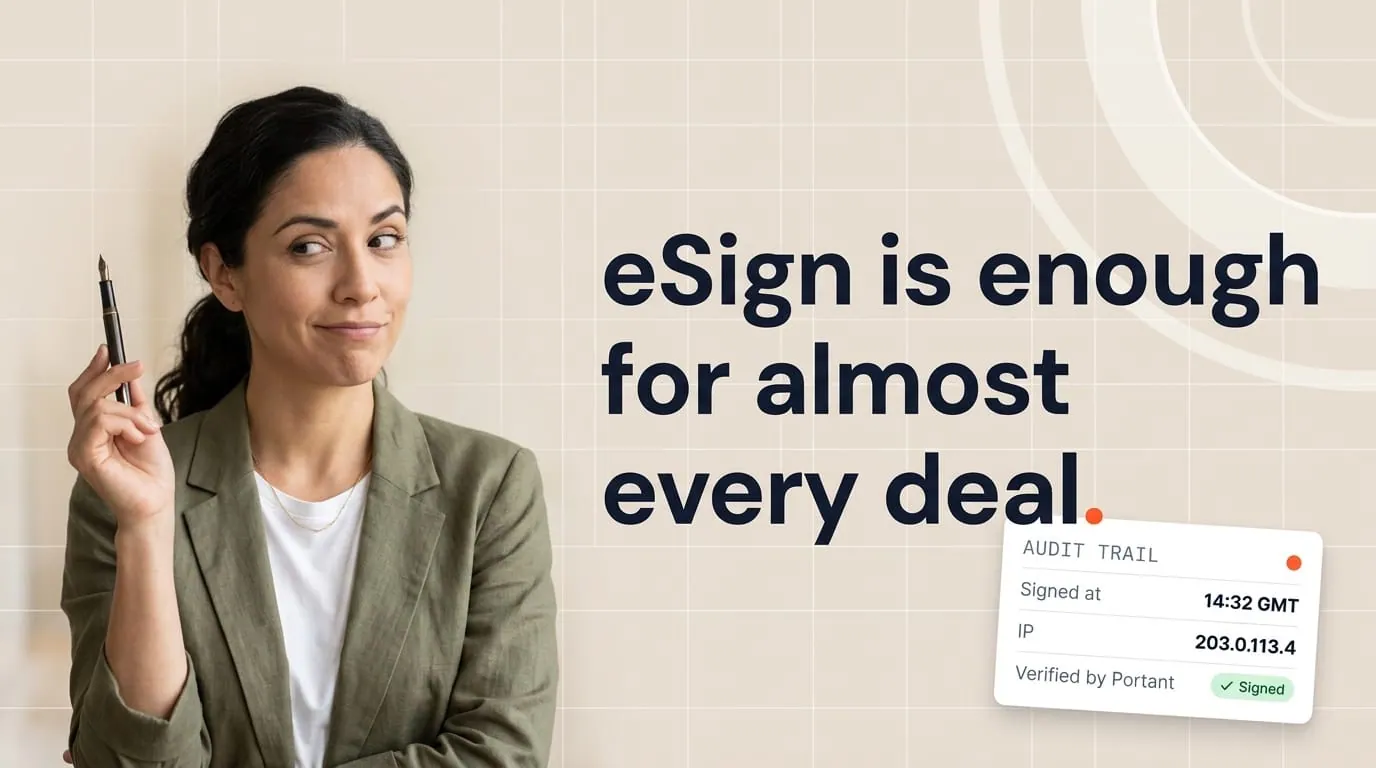
This data forms the audit trail, a complete log of who did what and when. While this safeguards static transactional documents, corporate compliance teams frequently utilize specialized ediscovery software to capture and preserve metadata across live, interactive communication channels as well. You can track changes made to a document, and signatures are no longer valid if the document is edited after signing.
- Distribute and Store: Once all parties have signed:
- Everyone receives a copy of the signed document along with a Certificate of Completion or similar audit record.
- The platform typically stores documents for a configurable period, anywhere from one hour for privacy-focused tools to 30 days or longer for business platforms, with enterprise plans often offering custom retention policies.
- Some organizations configure their eSign platform to automatically sync completed documents to cloud services like Google Drive, Dropbox, or their document management system.
Security & Compliance in eSign Platforms
Security matters enormously in eSign because the documents flowing through these platforms often contain sensitive information: pricing details, personal data, banking information, and confidential intellectual property. Reputable platforms invest heavily in protection, and understanding what to look for helps you choose a secure solution.
Transport and Storage Security
- Transport Security: All modern eSign tools use TLS 1.2 or TLS 1.3 for data in transit, preventing interception by third parties.
- Storage Security: Look for AES-256 encryption at rest, the same standard used by banks and government agencies.
- Regional Data Residency: Enterprise-grade platforms often offer regional data residency options, allowing you to specify that data stays within EU data centers or other geographic boundaries for compliance purposes.
Compliance Certifications
- ISO/IEC 27001: Information security management systems.
- SOC 2 Type II: Security, availability, and confidentiality controls.
- GDPR Compliance: For organizations handling EU personal data, look for Data Processing Agreements (DPAs) and clear data handling policies.
- HIPAA Compliance: Healthcare organizations need HIPAA-compliant options with Business Associate Agreements.
- 21 CFR Part 11: For highly regulated industries like life sciences.
Authentication Methods
- Basic Email Verification: Confirms the signer has access to the email address on file.
- SMS One-Time Passwords: Adds a second factor.
- Out-of-Band Passcodes: Shared separately with signers for additional control.
- SSO/SAML Integration: For enterprise deployments, ensures signers authenticate through your organization’s existing security infrastructure.
Document Controls
- Password-Protected PDFs: Prevent unauthorized opening.
- View-Only Links: Let stakeholders review without signing authority.
- Role-Based Permissions: Control who can send documents, who can only sign, and who has administrative access to audit trails and settings.
- Link Expiration Dates: Ensure signing invitations don’t remain active indefinitely.
Retention Policies
- Automatic Deletion: Some platforms automatically delete files after completion, useful for privacy but problematic if you need long-term records.
- Configurable Retention: Others retain documents for 30 days, a year, or indefinitely based on plan level.
- Custom Retention: Enterprise agreements typically allow custom retention aligned with your organization’s records management policies.
Core Features of Modern eSign Software
Most eSign platforms in 2026 share a common set of capabilities, with premium features layered on top for teams with more complex needs. Understanding the feature landscape helps you identify what matters for your workflows. E sign tools enable users to sign, edit, and share documents electronically across various devices and file types, emphasizing ease, security, and accessibility.
Document Creation and Editing
- Upload existing PDFs and place signature fields.
- Create forms from scratch.
- Edit text within documents.
- Merge multiple files into a single signing package.
- Generate digital documents dynamically from data sources.
- Use reusable templates for frequently-used agreements, employment offer letter template, NDA template, or service agreement template.
- PandaDoc allows users to sign PDFs and Word documents in a unified workflow, and provides 60 free documents per year for e-signing.
Workflow Features
- Sequential signing: Documents move from one signer to the next in order.
- Parallel signing: Multiple parties can sign simultaneously.
- Conditional logic: Routes documents based on signer responses.
- Automatic reminders and follow-up notifications.
Integrations
- Native integrations with Google Workspace and Microsoft 365.
- Smallpdf integrates with cloud services like Google Workspace and Microsoft OneDrive.
- CRM integrations with Salesforce and HubSpot.
- Cloud storage connections with Google Drive, Dropbox, Box, and OneDrive.
- Accounting and HR system integrations.
Mobile and Offline Signing
- Mobile apps for iOS and Android.
- Signers can review and execute agreements from their iPhone or iPad.
- Offline signing for field scenarios.
- In-person signing modes for physical presence situations.
APIs and Customization
- APIs and webhooks for deep customization.
- Embed signing experiences directly into your website or app.
- Automated triggers for agreements when deals close in your CRM or when new hires are marked as accepted.
- Webhooks notify your systems when documents are signed.
Business Benefits of Adopting eSign
Electronic signatures have shifted from a nice-to-have convenience to a default expectation for organizations operating with remote or hybrid teams. The benefits extend across speed, cost, visibility, and experience.
Speed
- Transactions that once took days or weeks now complete in minutes or hours.
- SaaS companies can close new subscriptions the same day a prospect agrees to terms.
- Hiring managers can send and receive signed offer letters within hours.
- Real estate closings can happen with all parties signing from their own location.
Cost Savings
- Eliminate paper and printing costs.
- Remove overnight shipping and courier fees.
- Reduce or eliminate physical storage for paper contracts.
- Industry studies suggest organizations save $20-40 per document when switching to electronic signatures.
Visibility and Control
- Dashboards show which agreements have been sent, viewed, signed, or are overdue.
- Automated notifications for contract renewals or pending signatures.
- Prevent missed deadlines and lost opportunities by emphasizing contractual obligations and the importance of contracts.
Customer and Employee Experience
- New hires complete onboarding paperwork before their first day.
- Customers sign service agreements without scheduling meetings or visiting offices.
- Expense approvals, policy acknowledgements, and routine forms flow through with minimal effort.
Environmental Impact
- Eliminating paper across thousands of transactions prevents significant printing and reduces shipping emissions.
- Organizations with ESG goals or sustainability reports can quantify these reductions as part of their environmental commitments.

Typical Use Cases for eSign in 2026
Electronic signatures now underpin business processes across organizations of all sizes, from solo freelancers to global enterprises. Different departments and industries leverage eSign for distinct document types and workflows.
- Sales and Revenue Operations: NDAs, proposals, quotes, order forms, master service agreements (MSAs), statements of work (SOWs).
- HR and People Operations: Employment contracts, offer letters, contractor agreements, policy acknowledgements, performance reviews, benefits enrollment forms.
- Legal and Compliance Teams: Board resolutions, intercompany agreements, corporate filings, compliance attestations.
- Finance and Procurement: Vendor agreements, purchase orders, subscription renewals, financing documents, payment authorization forms, budget approvals, expense reports.
- Field and Customer-Facing Scenarios: Rental agreements, work orders, installation reports, patient consent forms, insurance claims documentation.
How to Choose an eSign Solution
The “best” eSign tool depends entirely on your organization’s size, industry, and workflows, not just the monthly cost. Evaluating platforms against your specific needs prevents both overpaying for unused features and underbuying capabilities you’ll need as you scale.
- Individuals and Freelancers: Prioritize ease of use, intuitive mobile apps, free or low-cost plans, support for common formats, and simple templates for contracts you send repeatedly.
- Small Businesses: Look for team collaboration, branding, pricing models that fit your transaction volume, template libraries, CRM and accounting integrations, and branding options.
- Enterprise Organizations: Require advanced features like SSO/SAML integration, advanced admin controls, detailed audit trails, regional data residency, complex workflow capabilities, and API access. Adobe Acrobat Sign is a standalone e-signature solution designed for medium to large businesses, offering robust integrations and industry-ready compliance features.
- Teams Generating Documents from HubSpot, Google Docs, or Sheets: If your contracts, quotes, or proposals are already assembled from CRM or spreadsheet data, look for an eSign tool built into that document generation step rather than a separate app. Portant’s eSignatures are part of the same workflow that creates the document, with signing included in your monthly plan rather than charged per signature or per envelope.
Before selecting a platform:
- Review security and compliance documentation (ISO 27001, SOC 2 Type II, GDPR, HIPAA).
- Test with free trials and send test contracts internally (Smallpdf offers a 7-day free trial).
- Have users from sales, HR, and legal try the platform and provide feedback.
- Evaluate the mobile experience and audit trail.
Best Practices for Using eSign Securely and Effectively
Electronic signatures are powerful, but realizing their full value requires good internal practices that maintain security, legal defensibility, and operational efficiency.
- Match identity verification strength to risk: Use email verification for low-risk documents; add SMS codes, knowledge-based authentication, or government ID verification for higher-stakes agreements.
- Standardize templates: Work with legal counsel to create approved templates for NDAs, MSAs, employment offers, contractor agreements, and other frequently-used documents. Lock non-variable portions.
- Configure clear signing roles and orders: Define who signs first, who counter-signs, and who needs to approve before sending. Use conditional logic for specific circumstances.
- Train teams: Provide short internal guides or recorded demos on sending documents, what signers should expect, managing templates, and where completed agreements are stored.
- Establish retention and access rules: Determine retention periods, access permissions, and processes for revoking access when employees leave. Configure your eSign platform’s retention settings accordingly.
Future of eSign: AI, Automation & Regulation
Electronic signatures continue evolving alongside AI, automation, and emerging digital identity frameworks. Understanding near-term trends helps organizations make platform choices that will remain relevant as the landscape develops.
- AI-assisted contract workflows: Automatic field detection, clause analysis, risk scoring, and summary generation are becoming standard features.
- Increased automation: APIs and low-code tools embed eSign into broader business processes, making eSign invisible infrastructure.
- Emerging identity standards: EU digital identity wallets and government-issued digital IDs will make verified identity signing more accessible and routine.
- Regulatory frameworks: The EU’s eIDAS 2.0, US and UK guidance, and ongoing updates require organizations to monitor compliance from both vendors and local authorities.

Looking ahead, electronic signatures will remain central to paperless, remote-first business operations. The combination of legal validity, security features, and workflow efficiency makes eSign indispensable, not just for document signing but as the foundation for frictionless digital transactions across every industry.
Key Takeaways
- Electronic signatures are legally binding in most jurisdictions when proper consent and intent are demonstrated, backed by laws like the US ESIGN Act, UETA, Canada’s PIPEDA and Electronic Transactions Act, and EU eIDAS Regulation.
- The difference between electronic signatures and digital signatures matters: electronic is the broad category, while digital signatures use cryptographic verification for enhanced security.
- Modern eSign platforms handle the complete workflow from upload through audit trail, capturing timestamps, IP addresses, and authentication data for legal evidence.
- Security features to evaluate include TLS encryption, AES-256 storage encryption, compliance certifications (ISO 27001, SOC 2), and appropriate authentication methods.
- Choosing the right platform depends on your organization’s size and needs, freelancers prioritize simplicity, small businesses need integrations and branding, enterprises require SSO and compliance capabilities.
- Best practices include matching verification strength to risk, standardizing templates, training users, and establishing clear retention policies.
The path forward is clear: identify which documents and workflows would benefit most from electronic signatures, evaluate platforms against your specific requirements, and implement with security best practices from day one. Start with a free trial, run internal tests, and gather feedback from the teams who’ll use the system daily. The efficiency gains and cost savings compound with every paper process you eliminate.
How to Sign PDFs
Signing PDFs has never been easier or more secure, thanks to modern electronic signature platforms. Whether you need to sign a contract, agreement, or any other important document, the process is designed to be both user-friendly and legally binding. If you simply want to sign a PDF online, Portant offers a free tool that lets you add a signature to a document straight from your browser.
Steps to Sign PDFs:
- Upload Your Document: Upload your PDF to a trusted electronic signature platform, such as Smallpdf, PandaDoc, or similar tools.
- Choose Your Signature Method: Select from typing your name, drawing your signature with a mouse or touchscreen, or uploading an image of your handwritten signature. If you need a reusable image, our free signature generator lets you draw or type one and save it as a transparent PNG.
- Apply Your Signature: Place your signature in the appropriate location on the document.
- Finalize and Secure: The platform ensures the document remains secure and tamper-evident.
- Download or Share: Download the finalized PDF or send it directly to other parties for their signatures.
This fully electronic process eliminates the need for printing, scanning, or mailing paper copies. Every signed PDF is legally binding and compliant with industry standards, making it a game-changer for managing digital documents and keeping business moving forward.
Cloud Services for Electronic Signatures
Cloud services have become the backbone of modern electronic signature solutions, offering unmatched convenience, security, and accessibility for managing digital documents.
Key Benefits of Cloud Services for eSign:
- Easy Access and Collaboration: Platforms like Google Drive, Dropbox, and OneDrive allow users to upload, store, and organize documents in the cloud, making it easy to access and sign files from any device, anywhere with an internet connection.
- Seamless Integration: Many electronic signature platforms integrate with these cloud services, enabling users to initiate the signing process directly from their preferred storage solution.
- Streamlined Workflow: Select a document from Google Drive, add your electronic or digital signature, and store the signed version back in the cloud, all without leaving the app.
- Enhanced Security: Advanced encryption and access controls protect your files at every stage. Only authorized users can view, edit, or sign documents, and audit trails provide a clear log of every action taken.
- Efficient Management: Organizations can ensure their document workflow is both efficient and compliant, with robust backup and disaster recovery.
- Scalability: For small businesses looking to scale, cloud-based electronic signature solutions offer unlimited seats, flexible management tools, and customizable workflows.
By leveraging cloud services, organizations can keep agreements, contracts, and forms organized, secure, and accessible.