

If your sales team still formats quotes by hand or copies deal data into a proposal template, you're losing time on every deal. This guide shows you how to automate quotes and proposals in HubSpot using Portant.
You'll create a document template, connect it to HubSpot, add tags that pull live deal data, and set up workflow triggers so documents generate automatically when a deal reaches the right stage.
A quick look at HubSpot native quoting
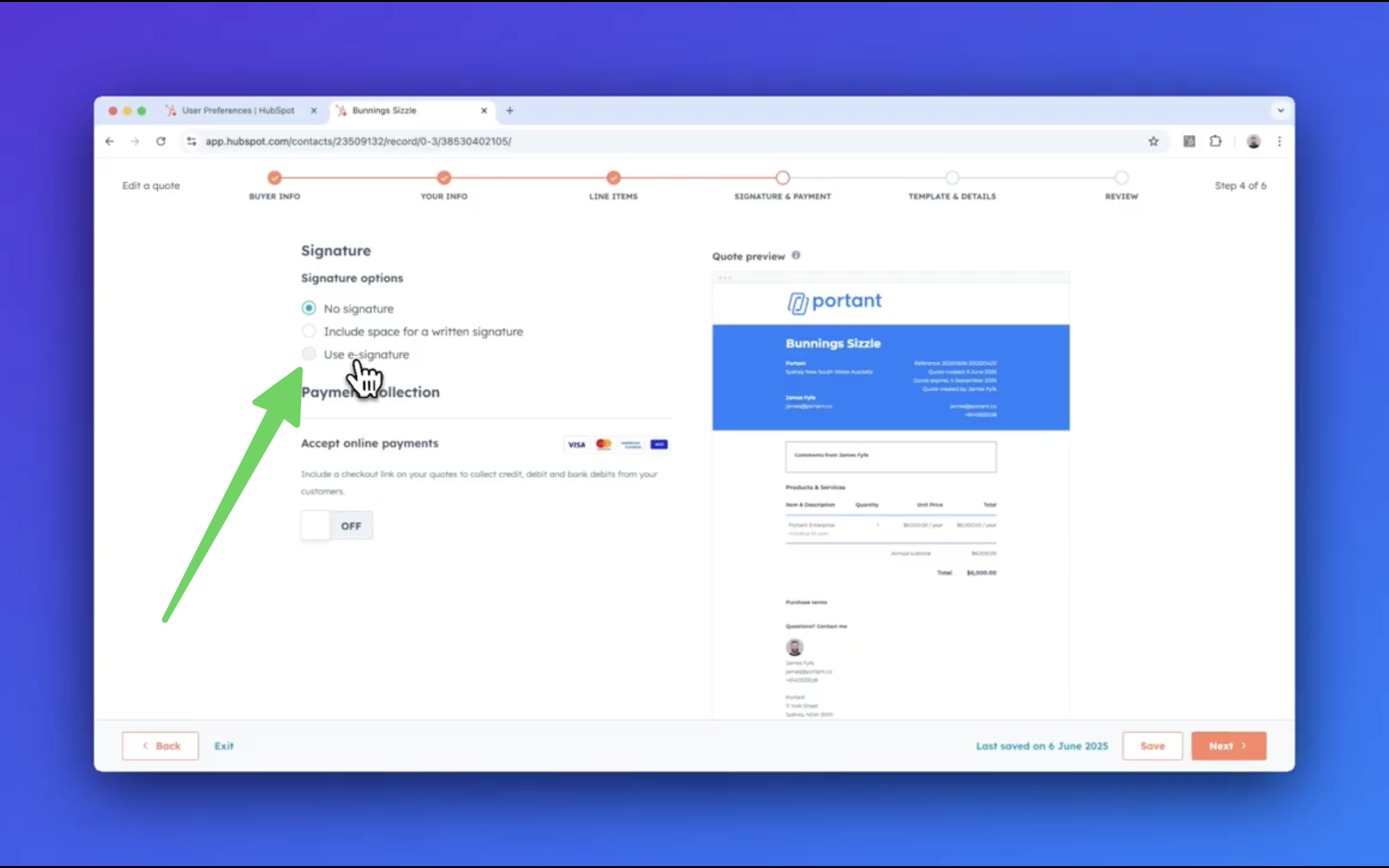
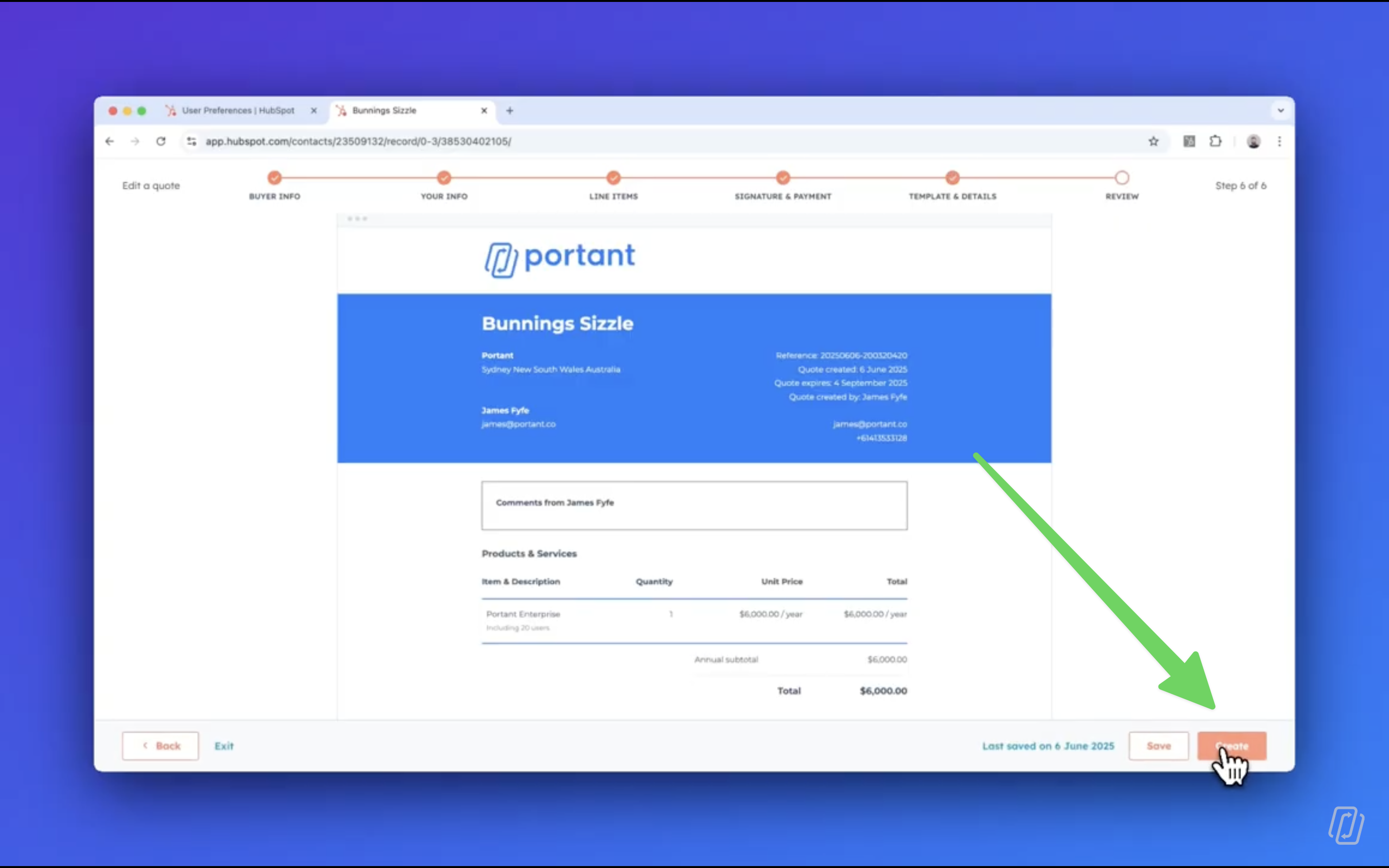
HubSpot has a built-in quoting tool that lets you create quotes directly from deal records. Here's a quick walkthrough:
You open a deal, click "Create Quote," review or add line items, apply discounts, and optionally include e-signature. HubSpot walks you through a simple UI to finalise and share the quote.
It works well for simple quotes. But the default templates need developer help for advanced customisation, and there's no native way to trigger quote generation automatically based on deal stage changes. That's where Portant comes in.
Automating quotes and proposals with Portant
Portant connects to HubSpot and lets you generate quotes and proposals automatically, using templates you build in Google Docs, Microsoft Word, PowerPoint, Sheets, or PDF. Here's how to set it up:
Step 1: Create a document template
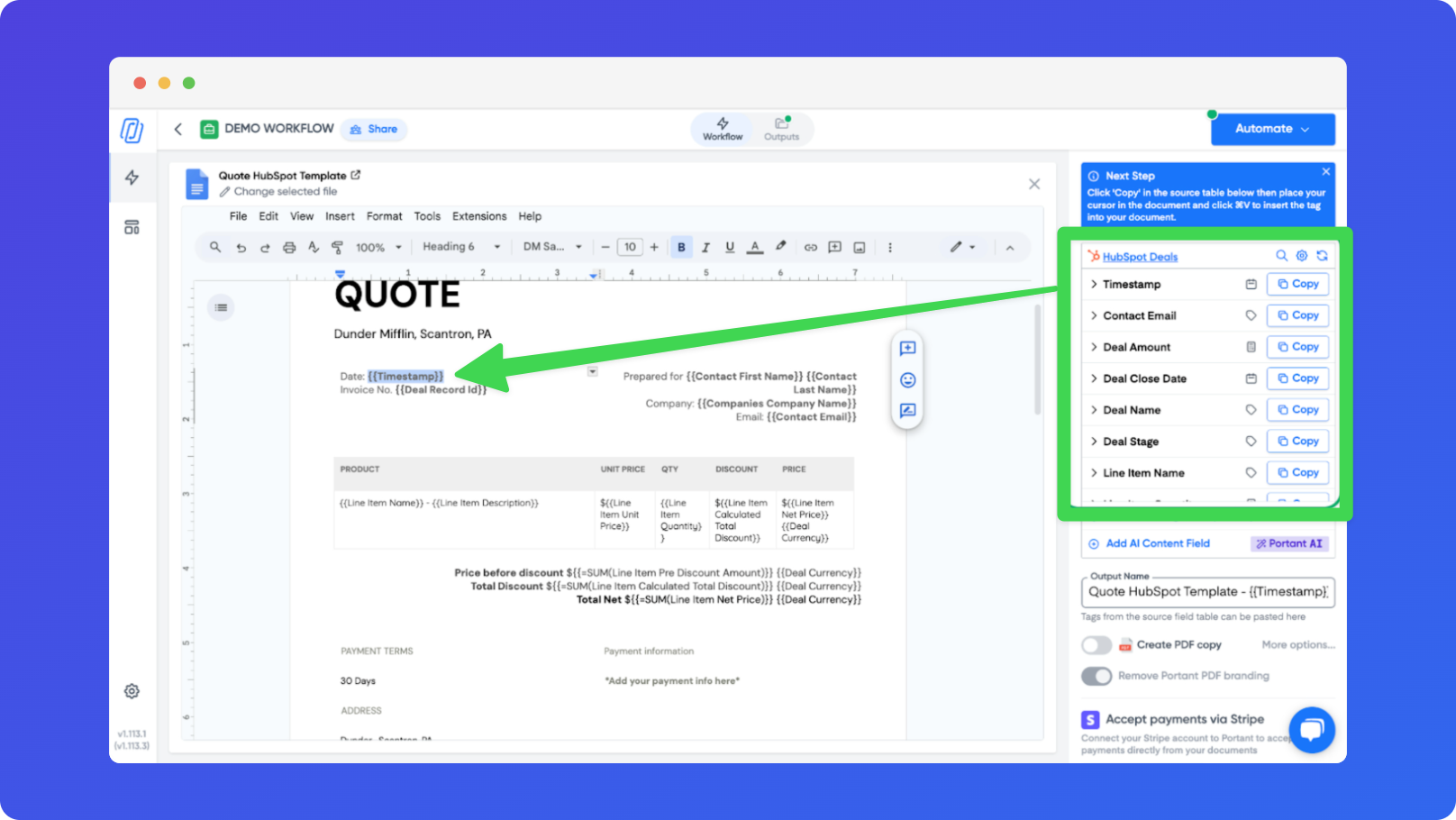
Start with a Google Doc, Word document, or any of the other supported formats. Build your quote or proposal layout, then use the Portant sidebar to insert tags from HubSpot properties directly into the document (for example, {{ deal.name }} or {{ deal.amount }}).
If you want a head start, try our HubSpot quote template or HubSpot proposal template.
Step 2: Connect Portant to HubSpot
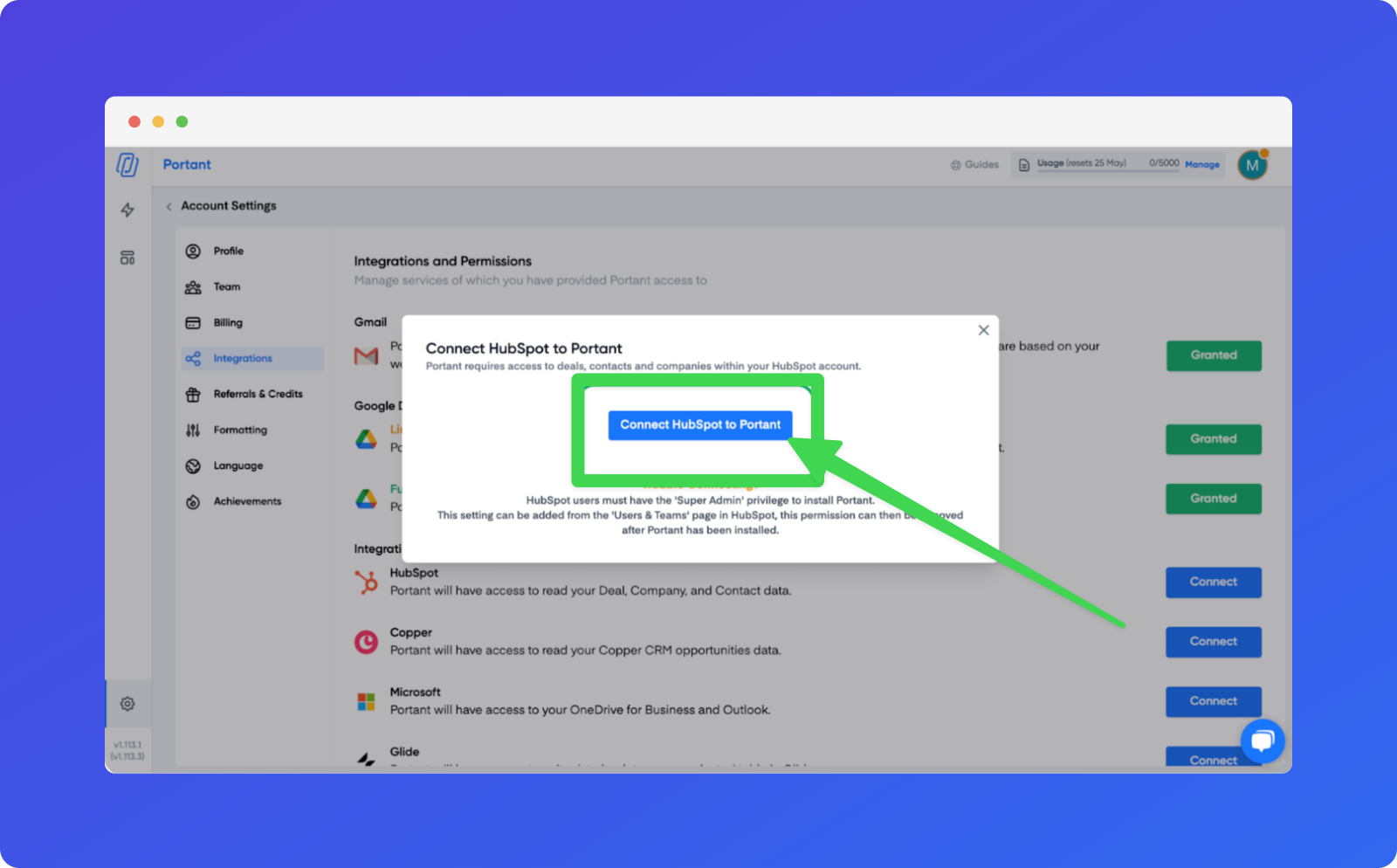
Connect your HubSpot account in Portant and create a workflow that links to your quote or proposal template. Portant pulls contacts, companies, deals, and line items from HubSpot so you can use them as tags in your document.
Step 3: Generate documents from deals
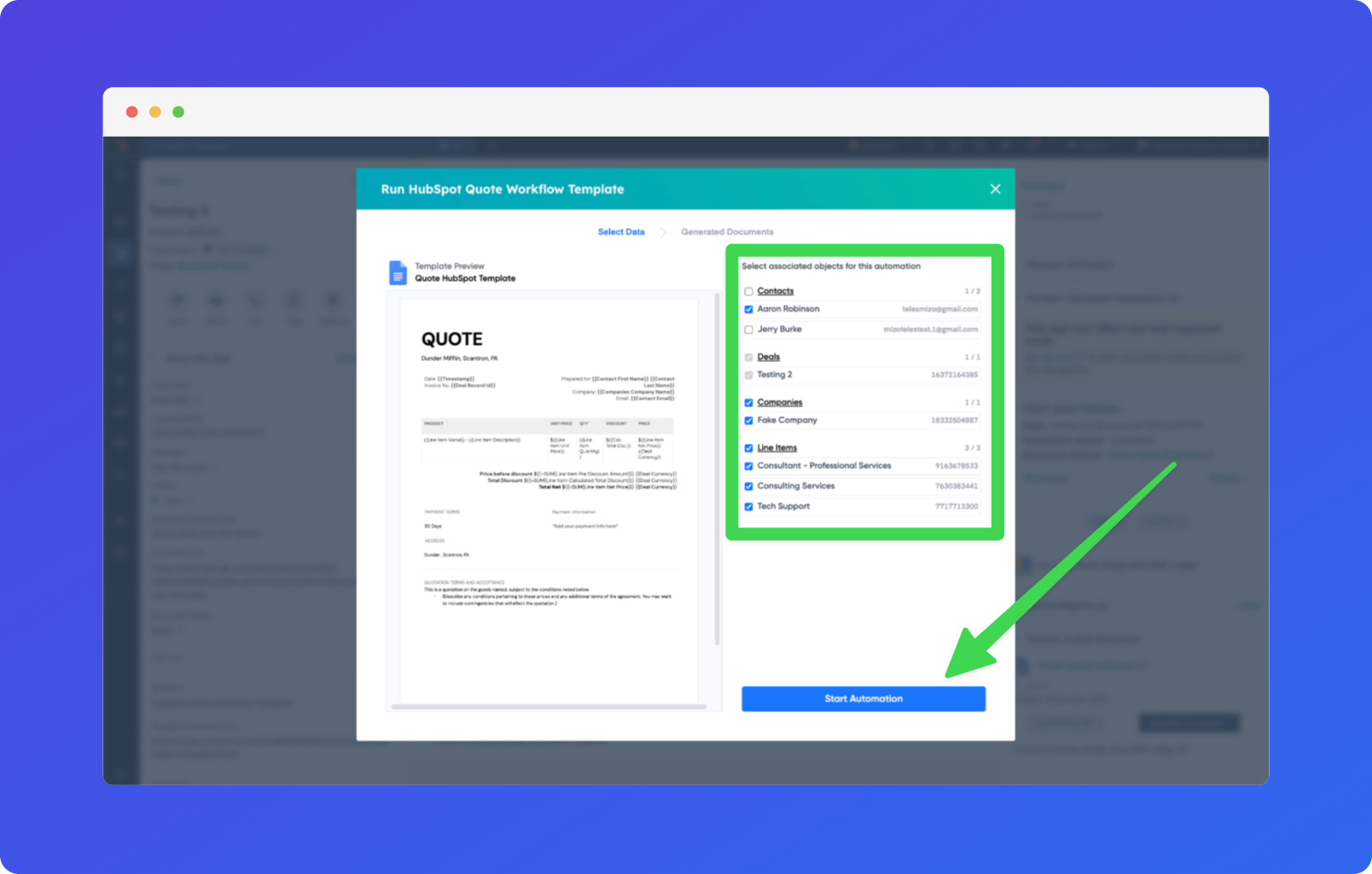
- Open a deal in HubSpot.
- Trigger the Portant workflow from the deal record.
- Pick the recipient and turn on e-signature if you need it.
- Portant pulls the deal data and fills in the document automatically.
Step 4: Automate with HubSpot workflows
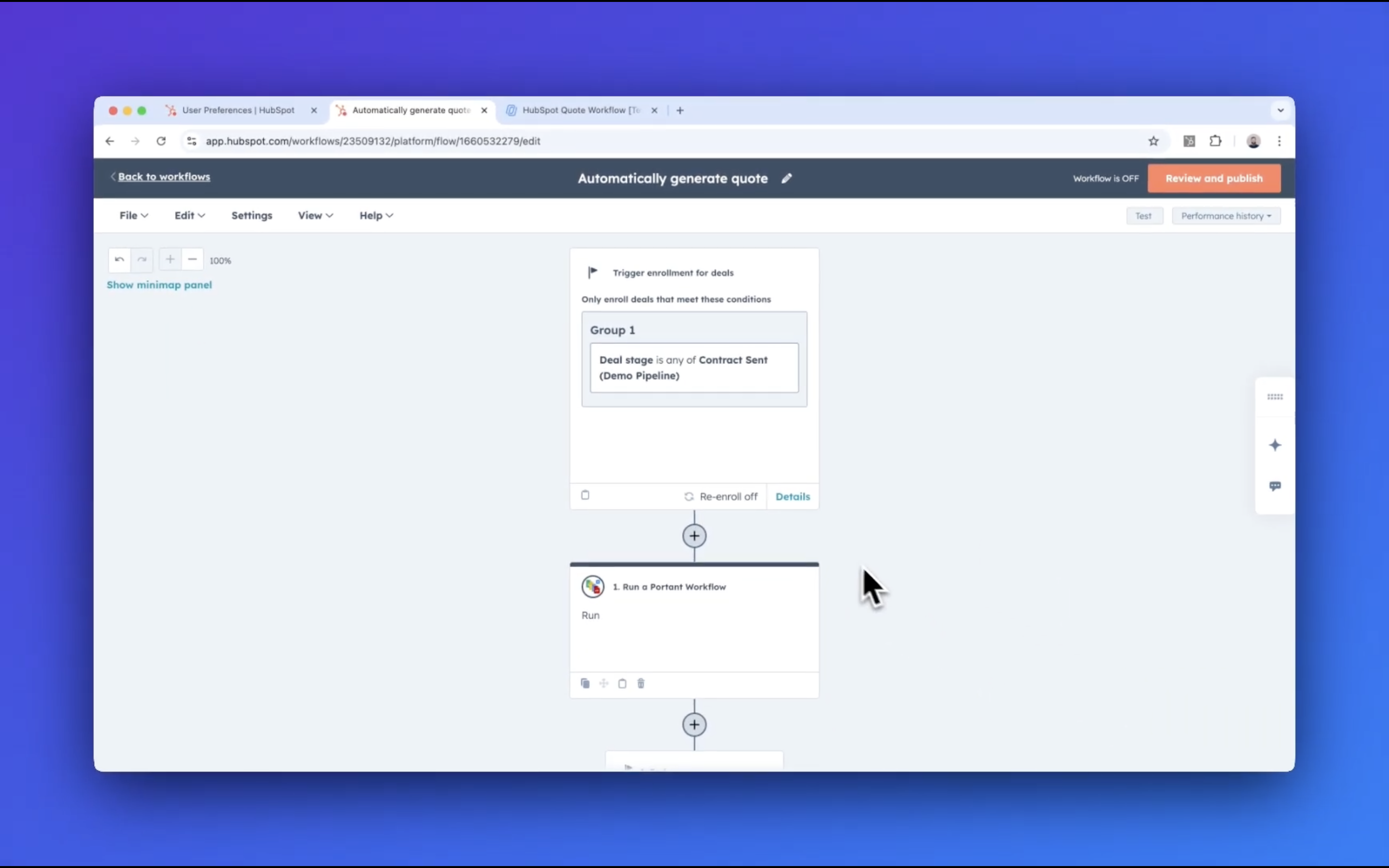
Set up a HubSpot workflow to trigger Portant when a deal stage changes (for example, when the stage moves to "Contract Sent"). The document generates automatically and saves to Google Drive or OneDrive. Status updates log in the deal timeline, so your CRM stays in sync.
For more detail, see how to add a Portant action to a HubSpot workflow in our docs.
What this gives you
- Consistent formatting across every quote and proposal
- Less time spent copying data and fixing templates
- Faster deal cycles, because documents go out as soon as the deal is ready
- A full audit trail in HubSpot, with every document linked to the deal
For the full setup guide, including connecting your source, managing properties, and viewing created documents, see the HubSpot section in our docs.